Smart meters have brought the same promise as other digital technology: making everyday tasks easier. Yet, as electricity costs continue to climb, some ratepayers question if the readings are accurate and whether the promise is grounded in reliable data.
“Smart meters are no different than our legacy meters that we used to have and that we still have on (our) system,” Jarrod Dockett, director for field and meter services for Atlantic City Electric, said last week.
While smart meters have been part of ACE for just three years, the technology has been deployed to its parent company’s broader fleet for nearly two decades, he said.
“We have almost 16-plus years of experience (with smart meters),” Dockett added.
With nearly 600,000 meters in service, smart meters perform the same function as traditional meters but can be read remotely, connect with customers’ accounts and support efforts to improve reliability, including the ability to determine whether the power is on at an individual’s home without being on site.
“(It) helps us with the strategy as it relates to storm restoration,” Dockett added, explaining the company can identify from afar whether there is any issue of a meter overheating or having been tampered with.
Over the summer, smart meters prevented 1,400 unnecessary service visits, resulting in a shorter disruption of services for customers, he said.
“We know how rural New Jersey is, whereas if you take a city like D.C., you might have a lot more customers in closer proximity to each other,” Dockett said. “When you prevent 1,400 unnecessary truck rolls in New Jersey, that’s a massive amount of minimalization of restoration time that would have been impacted by windshield (drive) time if we were running on those 1,400 orders.”
Utility crews do not have police escorts and must navigate the same traffic as everyone else on the road, he added, reiterating smart meters help target resources strategically to restore power to as many customers as possible as quickly as possible.
Smart meters also allow ACE to engage directly with its customers without requiring either side to make a phone call, he said.
“It automates us in our ability to provide reliable power to our customers,” Dockett said.
During a storm event where the power goes out due to wind, a tree limb going down or a lightning strike, smart meters help ACE quickly assess the extent and likely location of an outage by pinging meters, he said. If one home loses power, the problem may be limited to that service; outages affecting several homes or neighborhoods can point to an issue on a main line or feeder. Knowing that type of information before arriving on the scene allows the company to send the appropriate utility crews and equipment to the area where they’re most needed to restore service, he added.
Dockett, a former lineman, said in his day crews were dispatched to patrol “every feeder, every neighborhood, and go to every home to see it because we didn’t have that interaction between the meters and the individual homes.”
Today, smart meters provide the ability to do that kind of work in the background, he said.
While smart meters address outage responsiveness, the operational benefits do not answer customers’ concerns about rising bills or questions of accuracy reflected in the data behind their bills.
Electric bills include several components, including charges for supply, delivery and transmission costs, Dockett said. Supply is generally the largest portion of an electric bill, he added.
“The supply cost is about 49 cents of every bill dollar today. That’s up from 41 cents in 2021 over the same period,” Dockett said. “We do not generate electricity profits from supply costs. That supply cost goes directly to the customer.”
Electric supply costs are determined by PJM, the regional transmission organization that oversees the wholesale energy market. It handles the distribution of electricity needs for New Jersey and 12 other states, as well as the District of Columbia. It has come under fire for its basic generation capacity auction model, which resulted in historic high rates being passed down to state ratepayers last year.
Roughly 67 million consumers’ electric needs are met by PJM. New Jersey accounts for about 9.3 million of those customers, or nearly 14%.
In August, Atlantic City Electric officials disputed claims that the company was imposing another major bill increase. They said that, beginning in June, a typical residential customer using 649 kilowatt-hours of electricity would see a $10 decrease – from $201 to $191 – though actual bills vary by usage.
The company acknowledged customers’ concerns about affordability and said it shared them.
The statement followed criticism from U.S. Rep. Jeff Van Drew, who challenged the South Jersey utility over a notice telling constituents their bills would rise again. In a July 31 letter to company officials, Van Drew said the notice projected an increase in the average bill from $158 to $184. He requested a detailed explanation of how the notice aligned with Gov. Mikie Sherrill’s executive order directing utilities to prevent rates from rising at an unsustainable pace.
Van Drew, who last week lost his bid to be returned to office, continued his fight against the utility leading up to the election. He urged the Federal Energy Regulatory Commission to investigate and commission an independent review by experts with no financial ties to ACE or its parent company, Exelon, to determine whether smart meters play a role in surging electric costs in South Jersey.
“The first thing I would ask a customer to do is look at their bill from this time last year; see what the supply cost was, see what the weather was during that time frame because that is a major impact to a customer and how much electricity they use, and see if that is the correlation to the increase in the bill they’re seeing,” Dockett said.
Since 2023, New Jersey has experienced some of the coldest winters and the hottest summers, he said. In July, temps soared to 90 degrees or higher for 23 of the 31 days, he noted.
“So, if you have an all-electric home and you have your AC unit on, whether you’re working remote or away, most likely a customer is going to have their AC unit at least 72, 75 degrees,” he said. “If you’re combating against 90 degrees for 23 days … your HVAC is continuously running.”
While many ratepayers have upgraded to energy-efficient appliances at home, the one ticket item they often don’t think about is their HVAC system, he said. Even with an energy-efficient system, when the temperature is too hot or too cold, the constant operation of the system strikes the electric bill, Docket said.
Energy consumption for ACE customers is recorded every 15 minutes, and it updates on the company system about every four hours. When customers see a snapshot of their activity on the company’s app or account, it is generally within a 48-hour window, he said.
The usage information gathered by smart meters can also help customers keep track of consumption and explore options for managing their bills.
Atlantic City Electric also offers support options, including budget billing and payment arrangements of up to 12 months. Customers can sign up for high-usage alerts to monitor their electricity consumption, which is available only through smart meters, according to Dockett.
Unlike legacy meters, smart meters can communicate usage data to the utility, enabling high-usage alerts that help customers monitor consumption, he said. These tools complement budget billing, which can make monthly costs more predictable but does not reduce the amount of electricity a household uses, Dockett added.
“Where customers can see that (their budget billing cost) go up is if they are now doing something different in their home that is driving that energy cost to go up,” he said.
Extreme heat or cold can increase electricity use as customers adjust heating and cooling to stay comfortable, Dockett said. Even with budget billing, monthly charges may change as the utility accounts for actual consumption, which can surprise customers who expect the payment to remain fixed, he said.
Customers can also request a whole-home energy assessment, according to Dockett. An energy adviser visits the home to identify what may be driving electricity use and assess factors such as windows and appliance efficiency, he said.
Energy assessments can help identify what is using electricity inside the home, but Van Drew’s October missive to FERC highlighted concerns some customers have about why their meters appear to register usage even when every breaker is switched off. His office was actively seeking consumers’ reports on the matter.
“First thing that I want to say is this: If a customer truly has all of their breakers turned off and the wiring in their home is correct, where it goes meter to their breaker,” Dockett said, “if all of the breakers are all off and the main line is off, they should not see any power being utilized.”
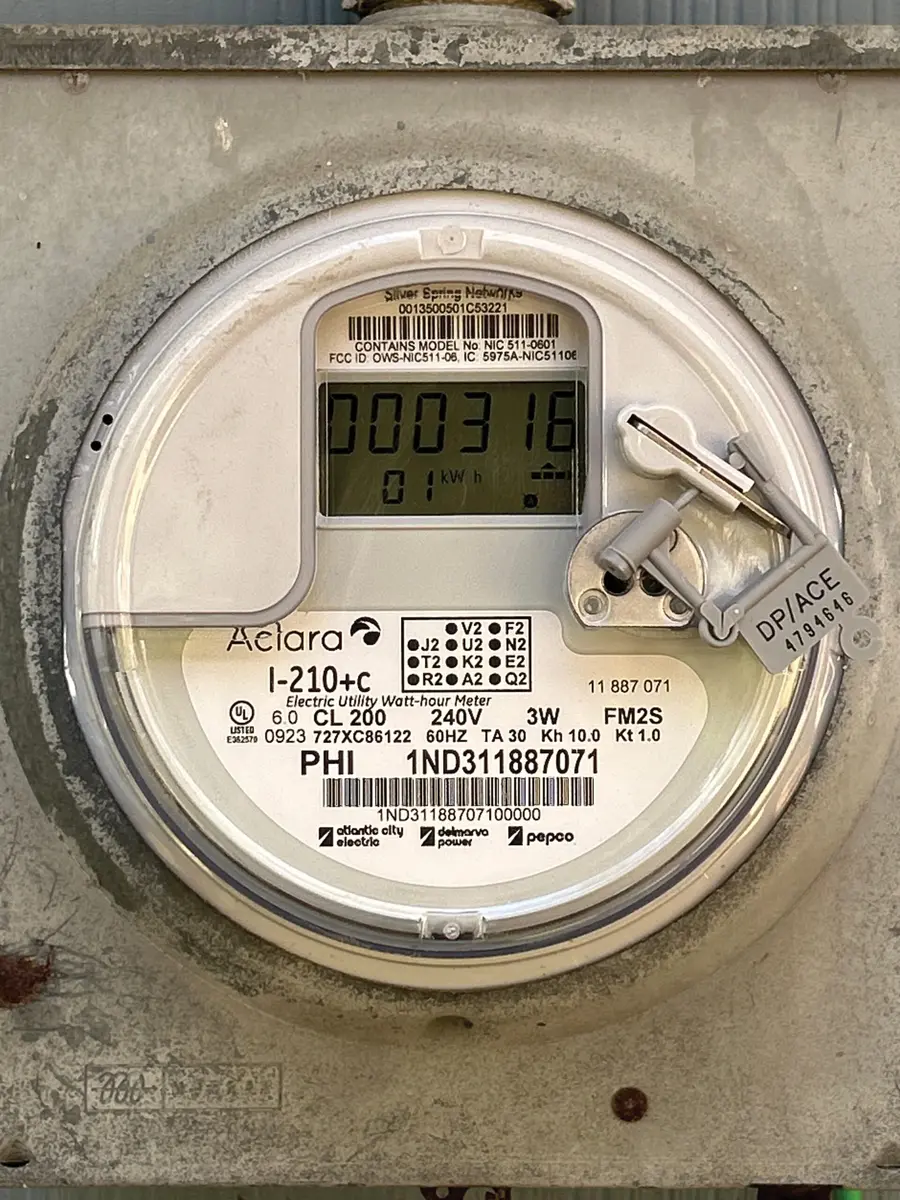
When customers switch off all their breakers, the meter may still display a number because it records electricity use cumulatively over its lifetime, he said. The first screen a customer may see is a diagnostic display that lights up the meter’s LEDs to confirm they are working, Dockett said. A subsequent screen shows the cumulative kilowatt-hours recorded since installation; that number does not reset.
“The only way that meter display would go off is if the power (from the street) feeding the meter was off,” he said, adding power from the street to the meter is how ACE is able to see what a customer is experiencing at their home. “If that connection is disconnected, that means there’s some action we need to do to restore power to that meter.”
If the reverse is true and a customer switched off the home’s breakers, the company would not be able to see that, Dockett said. Lower electricity use would be reflected in the next bill, but the meter doesn’t identify why consumption fell, he said.
Should the disconnect occur due to a utility line outage, the smart meter system can alert the company that power has been lost, he said.
While Dockett said unexpected power draw can be attributed to separate circuits – such as those powering detached garages or hot tubs – these discrepancies remain a point of contention. This disagreement led Van Drew to request an independent audit from FERC to determine if the smart meters are accurately recording usage, though there has been no public confirmation that FERC has acted on that request.