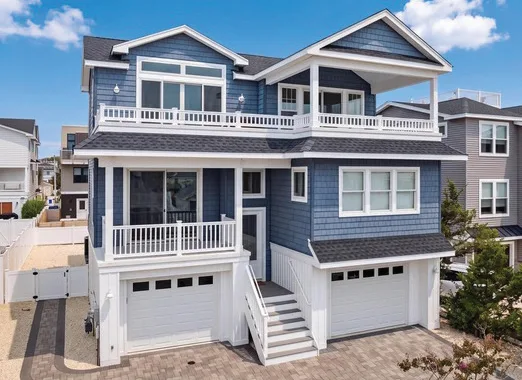
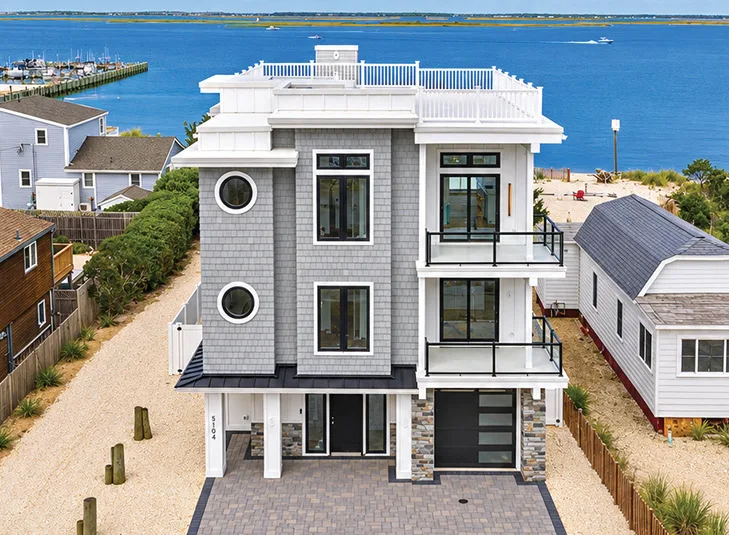
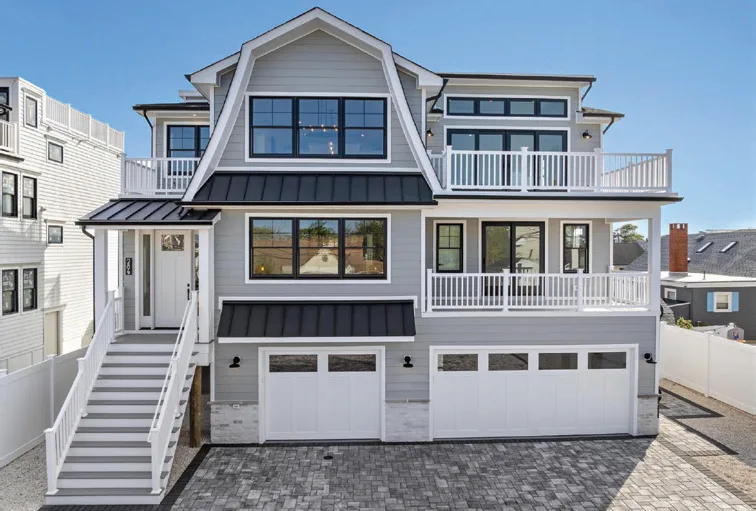
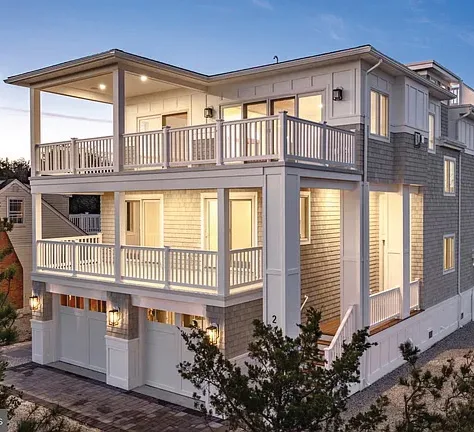
As Fortuna Park, a 21 single-family housing development, takes shape at the former LBI Grade School site in Ship Bottom, some supporters of East Bay Terrace’s temporary northbound-only redesign say the narrow residential road should not return to two-way traffic.
“There will be four additional residential access points,” Denise Hager and Merril Zebe wrote in a Nov. 18 letter to Ship Bottom officials. “This combined with the eight additional residences on 20th Street will result in a three-fold increase on this narrow roadway.”
On Nov. 23, borough officials said the curbs and sidewalks for the housing development will not change the size of the road. It only appeared to look wider when the school was onsite because the driveway apron blended into the road, according to officials. Now, the site requires a delineated curb and sidewalk in that space, officials said.
In September, Mayor William Huelsenbeck closed the book on a nearly two-decade saga by signing the final agreement to secure open space at the former LBI Grade School site.
The borough spent $3,309,974 to acquire 12 lots at the former school site, an agreement that includes six purchased lots and six donated by developer Michael Pagnotta, who also covered the costs for flood-level elevation and the installation of essential utilities and sidewalks for the 60,000-square-foot area. That breaks down to approximately $275,000 per 50-by-100-foot lot, Huelsenbeck said.
The agreement also eliminated the construction of 12 additional homes, according to the mayor.
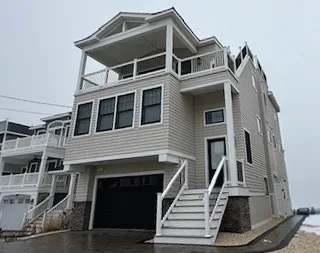
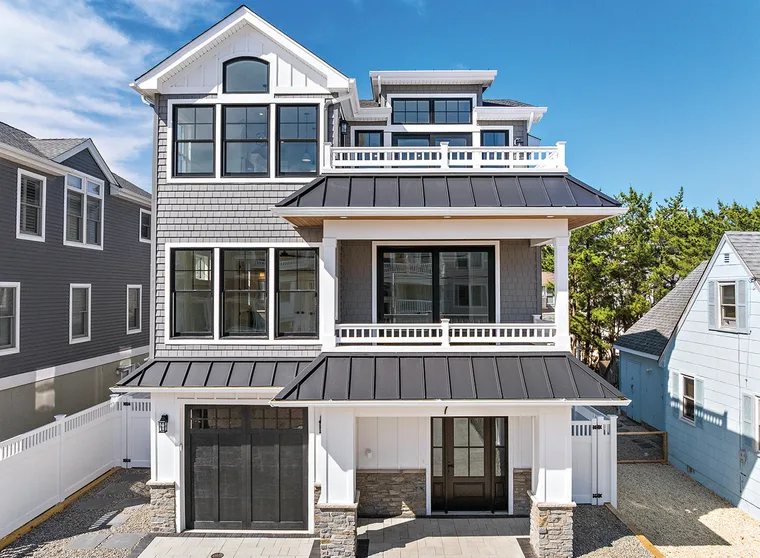
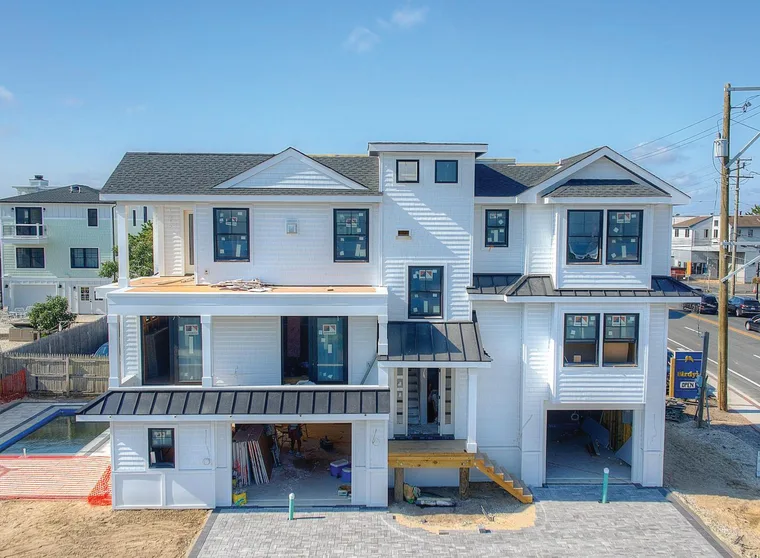
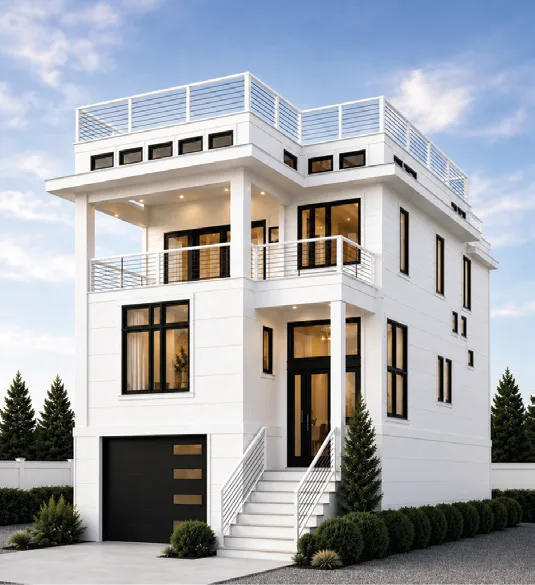
The rest of the school property is being redeveloped into a housing complex, Fortuna Park, with 21 homes to be built, along with stormwater management, landscaping and lighting at the site, located just south of the borough complex, between Central Avenue and East Bay Terrace. The nearly 4-acre parcel is flanked by 19th and 20th streets.
The open space secured by town officials will form a buffer zone between borough-owned property and the housing development, Huelsenbeck said.
The LBI Grade School was first listed for sale in 2011, a year after a feasibility study determined the former two-school Long Beach Island Consolidated School District, which serves five of the six Island communities, would be better served as a one-school district. Beach Haven has its own elementary school district.
Pagnotta, who has been in business on Ninth Street in Ship Bottom since 1987, was first linked to the school project more than a decade ago as the architect for another builder. In 2016, the two parted ways, and Pagnotta remained interested in the idea.
It would take another six years, two failed referendums and two bid cycles before Pagnotta’s offer to buy the school, located less than a mile from his office, was accepted by the LBI Consolidated Board of Education.
Still, what followed was a years-long legal battle between the school board and the Ship Bottom Borough Council over a zoning ordinance related to the site, which had been in use as an educational facility for nearly a century. That concluded in December 2024, and a redevelopment agreement was reached last spring between the council and Pagnotta.
The development is located in the heart of what some residents say is a longstanding hotpot for traffic safety concerns in the borough. For years, residents living along Barnegat Avenue, 19th Street and East Bay Terrace have periodically addressed concerns with the council at meetings.
Hager and Zebe’s missive highlighted the ongoing debate among residents of East Bay Terrace, known locally as Snake Alley for its zigzag route across four residential streets between 19th and 23rd streets.
Temporary changes were put into place in late August. Known as the East Bay Terrace Bikeway Demonstration Project, the changes include making the residential street one-way northbound while also instructing bicyclists and pedestrians where and how to use the road. Most of the temporary signs were removed earlier this fall, but the directional change is anticipated to remain in play until spring.
Borough officials have said feedback from residents and real-life observations will determine the project’s success. At the end of the trial period, the borough will decide whether to make changes permanent, modify the design, or remove the changes entirely.
“Returning EBT to two-way vehicular traffic between 19th and 21st streets would reintroduce the long recognized dangerous line of sight from 19th Street to EBT southbound that this reconfiguration has alleviated,” according to Hager and Zebe’s letter.
Between 19th and 21st streets, East Bay Terrace is only 18.5 feet wide at its widest point and cannot accommodate two-way vehicular traffic alongside a bicycle and pedestrian lane, they argue.
“For vehicles, two way: no way,” Hager and Zebe wrote, saying opponents’ argument that the changes were not necessary because there has never been an accident on East Bay Terrace is “pure pretzel logic.”
Opposition from some homeowners to the directional change is the current requirement for those living south of 19th Street to take Central Avenue or Long Beach Boulevard for access to their homes on 20th, 21st, 22 and 23rd streets where they intersect with East Bay Terrace.
Councilman David Hartman has said the borough public safety committee, police chief and members of the public provided input to help determine the best course of action for Snake Alley. That involvement held things up, delaying the temporary changes until the end of summer instead of earlier, he added.
The plans for East Bay Terrace are part of a broader review of traffic, pedestrian and bike safety across the borough: from the need for a traffic signal at 31st Street so bicyclists and pedestrians can safely cross the Boulevard for access to Ocean Boulevard; a two-lane residential roadway with access to the beaches in neighboring Long Beach Township; to the Causeway underpass and the deteriorating walkway, where there is no room for bikes, he said.
That challenge is especially clear on East Bay Terrace, where the August changes addressed what Hager, Zebe and some of their immediate neighbors call a persistent safety problem, but did not resolve differing views.
Hager and Zebe also acknowledge in their letter the borough’s decision came after careful consideration of available options, recognizing no solution can fully resolve what they say is East Bay Terrace’s long-standing safety and congestion problems.